The meaning of life
Published on
Now that’s a grandiose title for a blog post! Blame Jeremiah Lee, who selected it as the theme for January’s IndieWeb Carnival. I’ve not taken part in this before, but it’s basically a shared writing prompt. One person selects a theme, other people write about it on their own sites, and then the host does a round-up linking to all the various responses. I’ve come across it a few times before, but the topics have never really engaged me; they don’t feel like the sort of thing I’d write about. But… why not?
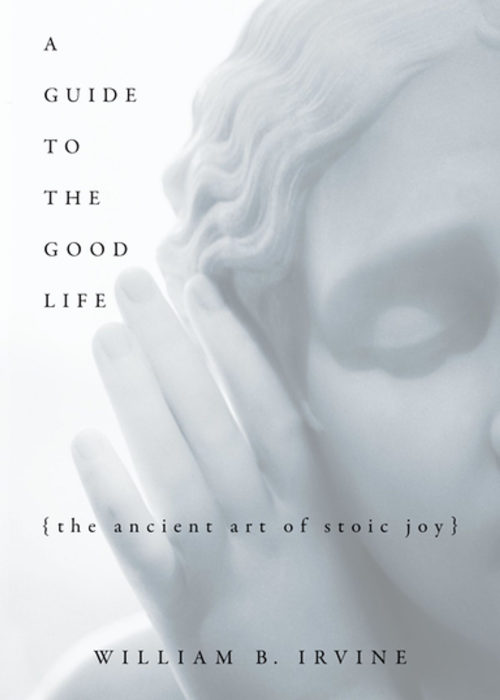
A Guide to the Good Life
The thing that actually tipped the scales for this particular topic was a book I was reading: A Guide to the Good Life by William B. Irvine. It’s basically a modern introduction to Stoicism. Not only is there a strong overlap between that and the meaning of life, one particular idea resonated with me:
In ancient Greece, when schools of philosophy were still prominent features of the cultural landscape, there were any number of schools to which parents could send their children. Suppose we could travel back in time to 300 bc and take a thinking person’s walking tour of Athens. We could begin our tour in the Agora, where Socrates a century earlier had philosophized with the citizens of Athens. On the northern side of the Agora we would see the Stoa Poikile, or Painted Porch, and holding forth there might be Zeno of Citium, the founder of the Stoic school of philosophy. This “porch” was actually a colonnade decorated with murals.
The idea that you could just wander around a city and come across people giving their considered opinions on philosophy is… something. Do we have any actual equivalent of that in the modern ages? Obviously you do get people espousing their views on the street, but they tend to either be proselytising or grinding a particular axe. And even if there was a modern day Socrates talking in Speaker’s Corner, would anyone actually stop to listen? We do have books, and speaking engagements, and so on, but they feel a lot more impersonal, and in a lot of cases motivated by money or politics or some other agenda. The philosophers of ancient Greek and Rome seemed to actually practice what they preached; as well as talking in public, and instructing in their schools, they’d write letters helping and advising people, or debating points of philosophy.
Some of that behaviour exists in academia, I’m sure, but it’s not really accessible to the person on the street in the way that it once was. But we do have personal websites and blogs. People just exchanging ideas, speaking out in public, with (generally) no expectation of reward or recognition for it. Is the “IndieWeb” the modern Agora? Probably not, but maybe it gives us some aspects of it that we otherwise wouldn’t have?
The Stoic approach to life
The Stoics believed in living a virtuous life; living as we were designed to live, in accordance with nature. A lot of those terms might be a bit loaded to the modern ear, and “designed to live” is awfully vague. I think this quote expands on it pretty well, though:
And for what function were people designed? To answer this question, the Stoics thought, we need only examine ourselves. On doing this, we will discover that we have certain instincts, as do all animals. We experience hunger; this is nature’s way of getting us to nourish ourselves. We also experience lust; this is nature’s way of getting us to reproduce. But we differ from other animals in one important respect: We have the ability to reason. From this we can conclude, Zeno would assert, that we were designed to be reasonable.
And if we use our reason, we will further conclude that we were designed to do certain things, that we have certain duties. Most significantly, since nature intended us to be social creatures, we have duties to our fellow men. We should, for example, honor our parents, be agreeable to our friends, and be concerned with the interests of our countrymen.
It all seems eminently reasonable. But in a world of fake news, social media, culture wars, and everything else, our ability to reason often seems forgotten. Hell, even being agreeable seems like it’s out of vogue at the moment. Would the Stoics despair if you transported one of them to the present day? Probably not. One of the other tenets they held was, well, being stoic. There was a concept of tranquility:
Stoic tranquility was a psychological state marked by the absence of negative emotions, such as grief, anger, and anxiety, and the presence of positive emotions, such as joy.
To get to this magical state, you need a form of detachment. Not in the sense of being completely passive and impartial as you float through life; that’s not how we’re “designed to life”. But in the sense of not letting outside events influence your inner state. When someone says something horrible, they don’t have the power to actually make you feel bad; that’s something you do. And I fully accept that it’s very easy to say that, and very hard to actually practice it.
This is actually a concept shared with many other religions and philosophies. Buddhism has the idea of Nekkhamma, Jainism and Hinduism have Vairāgya, and so on. Even if you don’t put any stock at all into religious teachings, it’s interesting that this concept comes up again and again.
If you’re like me, you probably have thoughts on all this. Sure, anxiety-free, anger-free life is probably nice, but how does that relate to the meaning of life and, anyway, shouldn’t you be angry about some things? The Stoics (particularly the Roman ones, who tended to not be so into physics and ethics) believed that this tranquility made it easier to focus on being virtuous. That makes sense to me; if we manage to get off the hedonistic treadmill of wanting shiny new things, of hoping people like our posts, and so on, then there’s surely more time in life for other pursuits. As for anger, I think the point is you don’t let the emotions drive your behaviour. There’s a difference between getting angry at what someone is saying and punching them in the face, and hearing someone, calmly and rationally assessing matters, and then punching them in the face. Maybe it’s best for society to punch certain people in the face. The Stoics were certainly not pacifists. Marcus Aurelius is one of the most well known, and he was Emperor of Rome. He’s hailed as one of the few good emperors, but you can bet he had an awful lot of blood on his hands even so.
Putting it into practice
It’s all well and good going on about not letting things bother you, but it’s very much easier said than done. The book introduces the concept of “negative visualisation”: imagining the negative things that could happen in your life, and thus starting to accept them. It also helps you to appreciate things that you do have, that you otherwise taken for granted. I’m sure everyone’s imagined what would happen if you lost your home, or your job, or so on… but what if you didn’t have your favourite mug? A particular tool? A certain piece of art?
I’ve heard of gratitude journals before. I’ve even tried keeping one for a while. There’s science showing it’s beneficial for mental health. But I always faded off after a short while. Once you tick off the big things: friends, family, food, etc, it feels like a stretch. Negative visualisation feels like a much better approach to me. I’m about to eat an apple; at the end of the day I’m not going to think back and write about an apple in a gratitude journal. But I can think briefly, in the moment, about not having the apple. Do I need to prepare myself for an apple-less life? Not really. But do I now appreciate the apple a little bit more, and take it for granted a little bit less? Yes. Does that make me a bit more tranquil? A bit less likely to wish I had something tastier than an apple? Also yes.
This process dovetails into the concept of impermanence, another concept found in Buddhism and elsewhere. Each apple could be the last one you ever have. If you knew that in advance, how would it change your approach? You’d probably savour it a bit more, appreciate it a bit more, and most of all not take it for granted. There’s a lot of pithy sayings about treating each day as if it’s your last, but at that level they’re a lot more nebulous than helpful; appreciating an apple, though? That’s something I can do.
It seems at first glance that thinking about negatives should be depressing or anxiety inducing. There are only so many reasons that this could be my last apple, and most of them involve something pretty unideal happening to me. But I don’t think it’s actually that glum. You don’t dwell on the negative, instead you use it to inspire a positive. And the alternative is to just sleepwalk through the process, not really paying attention, not gaining any enjoyment from it.
Bringing it back
Thanks for sticking with me on that tangent. You’ll be glad to know I’ve finished eating my apple now. The topic for this post was meant to be “the meaning of life”, not “thoughts on eating apples” or “living a Stoic life”, so allow me to try to tie it all together and pretend that I had a plan.
Life has no inherent meaning, it’s just a biological process. But that doesn’t mean we can’t seek to have a meaningful existence. The Stoics believed that involved being reasonable, and one of the approaches to give the reasoning room to happen is to strive towards an inner state of tranquility.
Obviously the Stoic approach isn’t the only one. And I’m not sure I did their philosophies any justice in my writing here. If it sparked your interest, though, I highly recommend picking up the book. If not, other approaches to life are available…

Be excellent to each other… and party on, dudes.
Related posts

Monthly Meanderings: January 2026
Welcome to the second edition of my monthly meanderings. For a bit of context, you can check out the introduction to the first edition. Website updates It’s been a pretty busy month for chameth.com. Three blog posts: The Meaning of Life — an entry into the IndieWeb carnival where I mostly review a book on Stoicism — Surge Protectors: Marketing vs Reality which is a dump of a rese...

The Curse of Knowledge and Blogging
The single worst part about blogging for me is trying to come up with ideas for what to write about. Not because they’re hard to come up with, but because every idea seems too basic or not worth talking about. Seems. It’s not just me, either. My friends will occasionally describe some interesting problem they’ve dealt with, and I’ll chime in with “you should blog abou...

If all you have is a hammer…
I presume everyone is familiar with the idiom “if all you have is a hammer, everything looks like a nail”. If not, well, there it is. It’s generally used pejoratively about being single-minded, but I think it also gives a glimpse into something more interesting: mental and perceptual sets. Before I explain, let me tell you a story about a person who bought a 3D printer. When they...
 MD87
#nobridge
MD87
#nobridge
Now that's a grandiose title for a blog post! Blame [Jeremiah Lee](https://www.jeremiahlee.com/), who selected it as the theme for [January's IndieWeb Carnival](https://www.jeremiahlee.com/posts/2026...